A No-Nonsense Guide to Sleep Technology That Actually Helps
From tracking rings to light therapy lamps, we break down which categories of sleep tech are backed by sound reasoning and which are mostly hype.
Our Picks
The market for sleep technology has grown substantially in recent years, offering everything from wearable trackers to app-based coaching. But not all sleep tech is created equal, and it’s worth understanding what these tools can and can’t actually do before investing in them.
What Sleep Trackers Can Tell You
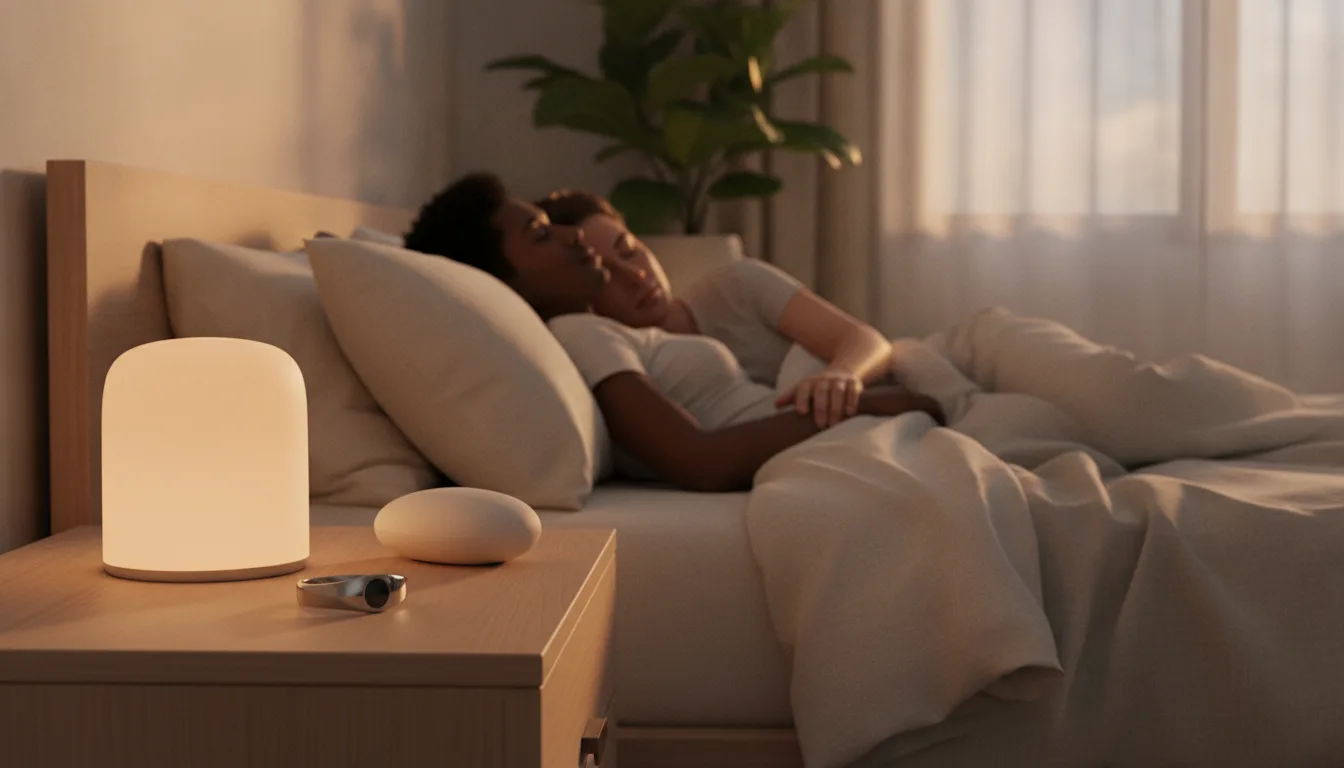
Wearable sleep trackers, worn as rings, wristbands, or clipped to bedding, generally estimate sleep stages using a combination of movement data (actigraphy) and heart rate variability. It’s important to understand that these are estimates, not clinical-grade measurements. Polysomnography, the gold-standard sleep study conducted in a lab, remains far more precise than any consumer device.
That said, consumer trackers can still offer real value, particularly for identifying patterns over time: consistently short sleep duration, unusual variability in bedtime, or noticeable dips in HRV following certain habits, like late alcohol consumption. Used this way, as a pattern-recognition tool rather than a precise diagnostic instrument, sleep trackers can meaningfully support behavior change.
Light Therapy: A Legitimately Useful Category
Light exposure is one of the most powerful regulators of the circadian rhythm, and light therapy devices, designed to deliver bright, controlled light exposure at strategic times, have a reasonably solid evidence base, particularly for conditions involving circadian misalignment, such as seasonal mood changes or jet lag recovery. Morning light exposure is generally considered the most impactful timing for reinforcing a consistent wake time.
Temperature Regulation Tools
Core body temperature naturally drops as part of the process of falling asleep, which is part of why a cool bedroom is consistently recommended sleep hygiene advice. Devices that regulate mattress or bedding temperature can support this natural process, particularly for individuals who run warm or share a bed with a partner who prefers a different temperature.
White Noise and Sound Masking
Sound machines and white noise devices address a straightforward problem: inconsistent environmental noise that fragments sleep. Their evidence base is less about actively inducing sleep and more about masking disruptive sounds, a modest but genuinely useful function for many people, particularly in noisy urban environments.
What to Be Skeptical Of
Not every sleep tech category delivers proportionate value. Devices or apps promising to dramatically “optimize” sleep through complex algorithms and minimal underlying science deserve scrutiny. A good rule of thumb: technology that supports well-established sleep hygiene principles, consistent timing, light exposure, temperature, and noise, tends to have a stronger evidence base than novel gadgets promising to shortcut the need for good habits altogether.
Choosing What’s Right for You
Rather than adopting every category at once, identify your specific sleep challenge first, inconsistent timing, an overly warm room, or environmental noise, and choose the single tool most directly suited to that problem. Sleep technology works best as a complement to solid sleep hygiene fundamentals, not a replacement for them.
Sources & References
- American Academy of Sleep Medicine
- Sleep Research Society
- National Sleep Foundation